
25
January'25As solar power adoption grows rapidly across homes and businesses, one of the most important decisions you’ll make when designing a solar power system is choosing the right type of battery. While lead-acid batteries have been the traditional choice for years, lithium-ion batteries are now proving to be a significantly better solution—especially when paired with modern solar inverters.
Let’s explore why lithium-ion batteries, particularly advanced options like FlinAmp 150, outperform lead-acid batteries in nearly every critical aspect.
Lithium-ion batteries are compact offer up to 85% space saving compared to bulky lead-acid batteries. This is especially valuable for residential and commercial setups where space is limited.
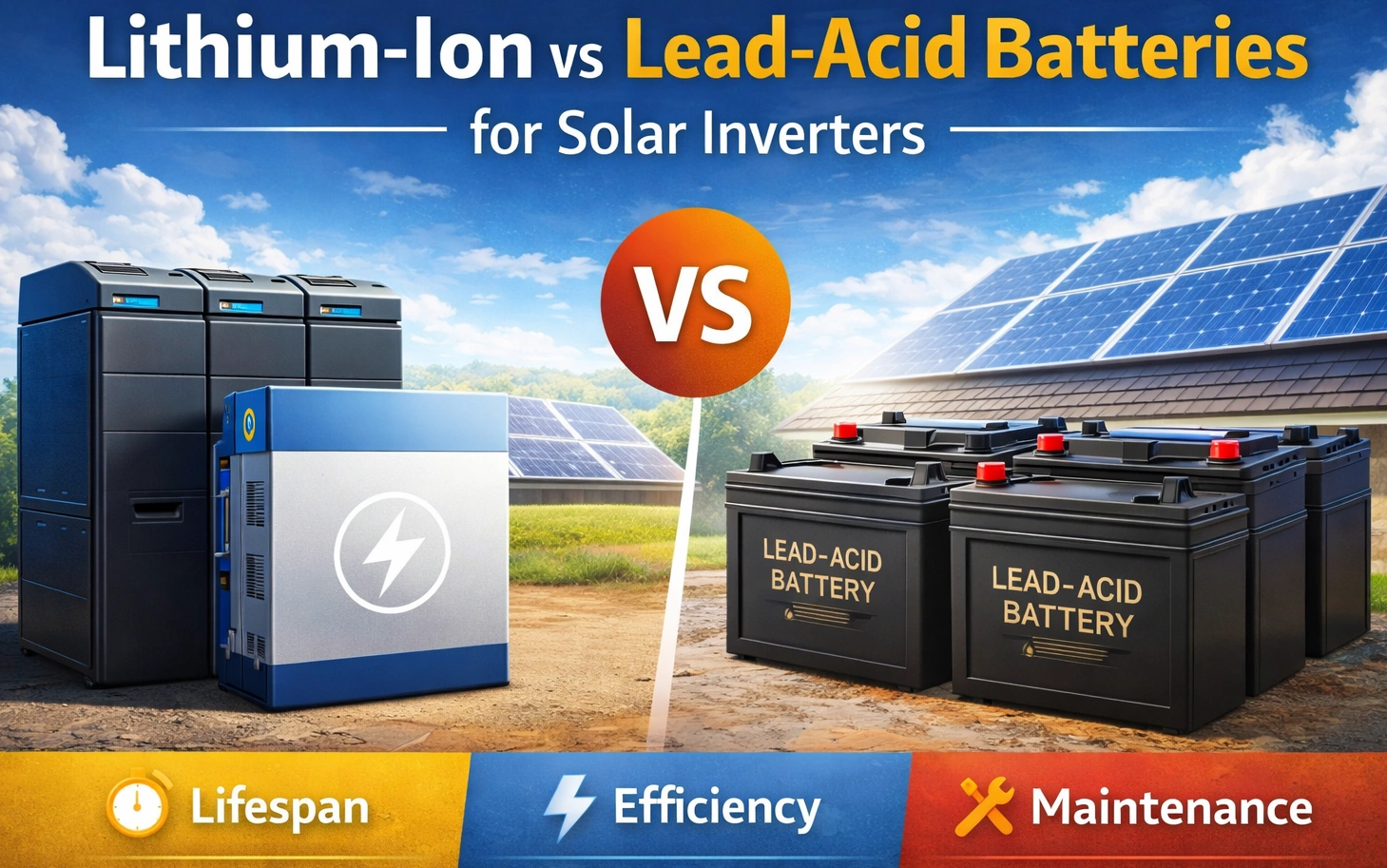
While lead-acid batteries typically last 3–5 years, lithium-ion batteries offer a much longer lifespan of 8–10 years and more, reducing replacement costs and system downtime.
Cycle life refers to how many times a battery can be charged and discharged before its capacity significantly degrades. Lithium-ion batteries can last up to 6000 cycles, compared to just 300–1500 cycles for lead-acid. This means more years of reliable energy storage.
Lead-acid batteries struggle with high discharge rates, making them not suitable for high-power applications. In contrast, lithium-ion options can easily handle higher discharge currents, such as 150A in the FlinAmp 150.
Lithium-ion batteries boast a 98% round-trip efficiency, meaning almost all the energy you store is available for use. Lead-acid batteries lag behind with just 60% efficiency, wasting a large chunk of your generated power.
Lead-acid batteries require regular maintenance every 3 months, including water topping and terminal cleaning. Lithium-ion batteries, on the other hand, are completely maintenance-free, saving time and hassle.
Modern lithium-ion batteries like the FlinAmp 150 come with Smart Battery Management Systems (BMS), integrated inverter communication, and remote monitoring, allowing for real-time diagnostics, protection, and optimization. Lead-acid batteries lack these smart features entirely.
| Feature | FlinAmp 150 | Other Lithium | Lead Acid |
|---|---|---|---|
| Space Saving | Up to 85% saving | Up to 85% saving | – |
| Life Span | 16 years | 8–10 years | 3–5 years |
| Cycle Life | 6000 cycles | 3000 cycles | 300–1500 cycles |
| Discharge Current | 150A | 100A | Not Suitable |
| Round-trip Efficiency | 98% | 98% | 60% |
| Maintenance | No Maintenance | No Maintenance | Every 3 months |
| Active Balancing | Yes | No | No |
| Communication with Inverter | Yes | No | No |
| Remote Monitoring | Yes | No | No |
| Battery Management System (BMS) | Smart BMS | Regular BMS | Not Available |
Click here to find out more about FlinAmp LiFePO4 Lithium Batteries.
Can You Run an Induction Stove on Solar or an Inverter in India?
With LPG prices rising and occasional supply shortages, many households in India are exploring induction...
Comparing Ongrid, Offgrid, and Hybrid Solar Inverters: Which One Is Right for You?
Choosing the right solar inverter is key to getting the most out of your solar...
Why You Should Choose Solar Energy in India
India is one of the best places in the world to adopt solar energy. With...
 Shop Flin

 Login
Login
 Register